











research
Gene study settles debate over origin of European Jews

By AFP | 17 Jan 2013
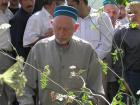
Jews of European origin are a mix of ancestries, with many hailing from tribes in the Caucasus who converted to Judaism and created an empire that lasted half a millennium, according to a gene study published on Thursday.
The investigation, its author says, should settle a debate that has been roiling for more than two centuries.
Jews of European descent, often called Ashkenazis, account for some 90 percent of the more than 13 million Jews in the world today.
Dark energy camera snaps first images ahead of survey

Source : BBC | 19 Sep 2012
The most powerful sky-scanning camera yet built has begun its quest to pin down the mysterious stuff that makes up nearly three-quarters of our Universe.
The Dark Energy Survey's 570-million-pixel camera will scan some 300 million galaxies in the coming five years.
The goal is to discover the nature of dark energy, which is theorised to be responsible for the ever-faster expansion of the Universe.
Its first image, taken 12 September, focussed on the Fornax galaxy cluster.
Bee study lifts lid on hive habits
By Ian Sample | Guardian | 17 Sep 2012
Experiments on the division of labour in honeybee hives have revealed why some bees do the waggle dance while others nurse their queens.
The roles require drastically different behaviours, with nurses feeding the larvae and performing royal grooming duties, and foragers navigating great distances and performing complex dance routines to point others in the direction of rich sources of nectar.
Cheap and cheerful: scientists find colour that never fades
Source : Agencies | 11 Sep 2012
Scientists have found nature's way of creating colour that never fades, a technique they say could replace pigments used in industry with natural plant extracts in products from food colouring to security features in banknotes.
Layers of cellulose that reflect specific wavelengths of light - 'structural colour' found in peacock feathers, scarab beetles and butterflies - make a particularly intense blue in the Pollia condensata plant, scientists say.
Southeast Asian Muslims Among World’s Most Devout
By Eric Bellman | The Wall Street Journal | 27 Aug 2012
Southeast Asia’s Muslims can be confident that when it comes to some key beliefs they are among the most devout in the world.
A Pew Research Center survey into the values, rituals and lifestyles of more than 35,000 Muslims around the world showed that the Muslims of Indonesia, Malaysia and Thailand were often among the most enthusiastic followers of some of the five pillars of Islam: the declaration of faith, prayer, alms giving, fasting during Ramadan and going on a pilgrimage to Mecca.
Mother of many modern languages traced to ancient Turkey
By Wynne Parry | CBS | 25 Aug 2012
(LiveScience) English is one member of a large family, the Indo-European languages, that are now spoken by a huge swath of the world. But where they originated is the subject of controversy, with experts undecided between two areas of western Asia.
Sum of all fears: Arabs read an average of 6 pages a year, study reveals

Source : Al Arabiya | 16 Jul 2012
There are some readers for whom obtaining a first edition copy of their favorite book or author is of great import and this is evidenced by people standing in long lines to get their hands on new books. While this may be a common site in the West, many believe this is not the case in the Arab world.
There is a common perception too about the number of Arabs that frequent libraries. That number mirrors the nature of a reading culture and can be used to evaluate reading habits among its generations.
Global warming close to becoming irreversible - scientists
By Nina Chestney | Reuters | London | 28 Mar 2012
The world is close to reaching tipping points that will make it irreversibly hotter, making this decade critical in efforts to contain global warming, scientists warned on Monday.
Scientific estimates differ but the world's temperature looks set to rise by six degrees Celsius by 2100 if greenhouse gas emissions are allowed to rise uncontrollably.
Race is on to find life under Antarctic ice sheet
By Alissa de Carbonnel | Reuters | Moscow | 14 Feb 2012
The race is on to discover life in the most remote and extreme environment known on Earth.
Russia has set the pace, piercing through Antarctica's icy crust to reach a freshwater lake to try to find ancient or new kinds of life that have adapted to the extremely cold, sunless climate and may shed light on the origins of evolution.
Scientists say quartz is key to understanding quakes
Source | Reuters
16 Mar 2011
Underground quartz deposits worldwide may be behind earthquakes, mountain building and other continental tectonics, a discovery that may aid in predicting tremblers, according to a study released on Wednesday.
The findings by Utah State University geophysicist Anthony Lowry and a colleague at the University of London, to be published Thursday in the journal Nature, may solve a riddle of the ages about the formation and location of earthquake faults, mountains, valleys and plains.