










Israel under fire at IAEA meeting
Source : Middle East Online
Vienna | 10 Jun 2010
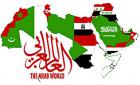
Arab states criticized Israel Thursday at a meeting of the UN atomic watchdog, calling on the Jewish state to come clean about its nuclear capability and open up to international scrutiny.
Arab countries had succeeded -- despite objections by western states and the United States in particular -- in having an item entitled "Israeli nuclear capabilities" formally included on the agenda of a meeting of the International Atomic Energy Agency here.
It was the first time since 1991 that the issue has been included for discussion by the IAEA's 35-member board.
Israel, a member of the IAEA but not a signatory to the Nuclear Non-Proliferation Treaty (NPT), is widely believed to be the only nuclear power in the Middle East, with around 200 warheads, but has maintained a policy of deliberate ambiguity about its capabilities since the mid-1960s.
Speaking on behalf of the Arab group, Sudan's ambassador to the IAEA Mahmoud El-Amin told the closed-door session that Israel was a "nuclear danger".
And that danger was "reinforced by Israel's aggressive policies towards the Arab countries, threatening peace and security in the region," as seen in the recent Israeli raid on a Gaza-bound aid flotilla, El-Amin said.
Iranian ambassador Ali Asghar Soltanieh similarly described "Israel's nuclear capability a serious threat to the health, security and prosperity of the world, because the Israeli regime refuses to be bound by any international commitments or moral values."
It was Arab countries that tabled a resolution at the IAEA's general conference last September, passed with a narrow majority, urging Israel to join the NPT.
A similar resolution was passed at last month's NPT Review Conference in New York, as well as one calling for a regional conference in 2012 to advance the goal of a nuclear-free Middle East.
But Israel has denounced the resolution as "deeply flawed and hypocritical" because it "ignores the realities of the Middle East and the real threats facing the region and the entire world."
At the IAEA on Thursday, US envoy Glyn Davies described the inclusion of the Israel issue at the IAEA's regular June board meeting as "untimely and uncalled-for."
It was "distracting, divisive, pre-empting and prejudicial" to the 2012 conference, Davies told reporters.
"In order for that conference to succeed, all of the parties in the region need to come together voluntarily. By talking about this here in Vienna, we don't help that process. In fact, what we do is undercut it."
Establishing a nuclear-free Middle East was "not going to happen if the countries in the region engage in name-calling," Davies said.
The IAEA should talk about more pressing matters, such as Iran, which was currently the biggest proliferation threat, he said.
"These are countries that are in violation of ... their responsibilities to the IAEA and as signatories of the NPT. That's the business of the IAEA and that's what we ought to be talking about," Davies said.