





About Islam
Hijrah calendar: A landmark of the world history

By Abu Tariq Hijazi | 19 Nov 2012
The word Hijrah, which stands for migration, is a full message of Islam in itself. It strikes the mind with several questions such as, who migrated; and when, where and why the migration took place. In brief, Prophet Mohammad (peace be upon him) migrated in September 622 CE from Makkah to Madinah to save and promote the Truth.
Hudaibiyah: A turning point in the history of Islam
By Abu Tariq Hijazi | 15 Nov 2012
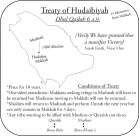
The incident of Hudaibiyah reserves in history a significant phase of Islam when Muslims got an opportunity to unexpectedly notch gains from the jaws of an apparent defeat.
It was the sixth year of Hijrah since the Prophet (peace be upon him) and his supporters had left the beloved city of Makkah. They were eager to visit the holy Kaaba and perform tawaf (circumambulation).
Preserving spiritual gains from Haj
Source : IslamWeb | 09 Nov 2012
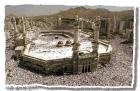
Allah the Almighty legislated acts of worship and obedience for great wisdom and sublime objectives. They strengthen one’s faith, purify soul, correct the attitude and refine the morals. If acts of worship do not achieve these objectives, then the Muslim would not benefit from them properly. In such a case, acts of worship might turn into lifeless rituals that one performs without any actual influence on his reality and attitude.
Signs of a Mabroor Haj
Source : Agencies | 30 Oct 2012
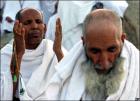
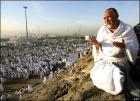
When the pilgrims return to their home countries after the journey of Haj, they return spiritually refreshed, forgiven of their sins, and ready to start life anew, with a clean slate. Family and community members often prepare a celebration to welcome pilgrims home and congratulate them on completing the journey. Those who have performed the Haj are often called by an honorific title, “Haji,” (one who has performed the Haj).
Jairana: A landmark in the history of Islam
Source : Arab News | 02 Oct 2012
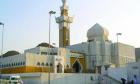
The bloodless conquest of Makkah occupies a great moment in the history of Islam. But when the holy Prophet (peace be upon him) heard of war preparedness of Hawazen and Thaqeef, he marched to Taif heading a 12,000 strong force. It was the largest force commanded by him at that time. Initially, Muslims suffered a setback, but with the Prophet’s (pbuh) undaunted courage and strong faith in Allah’s support they defeated the large pagan force at the Battle of Hunain.
Meaning of justice in Islam
Source : IslamReligion | 22 Sep 2012
In the Islamic worldview, justice denotes placing things in their rightful place. It also means giving others equal treatment. In Islam, justice is also a moral virtue and an attribute of human personality, as it is in the Western tradition. Justice is close to equality in the sense that it creates a state of equilibrium in the distribution of rights and duties, but they are not identical. Sometimes, justice is achieved through inequality, like in unequal distribution of wealth. The Prophet of Islam declared:
Four things upon which the world rests - by Shaykh Said Afandi al-Chirkawi
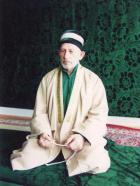
The Prophet (peace and blessings be upon him) said: “The world rests on four things: the scholarship of the ‘alims, the justice of the rulers, the generosity of the wealthy, and the prayers of the fuqara (people who are conscious of Allah)”.
Just Rulers:
On the Prohibition on Discussions Regarding the Predestination of Allah - Shaykh Said Afandi al-Chirkawi

The prophet (peace and blessings be upon him) said: “If people are talking about the predestination of The Most High Allah - you be quiet, if they talk about astrology (the science of predicting by the stars) - be quiet, if they talk about my companions - likewise, be quiet”.
Zakat: The third pillar of Islam
Charity is not just recommended by Islam, it is required of every financially stable Muslim. Giving charity to those who deserve it is part of Muslim character and one of the five pillars of Islamic practice. Zakat is viewed as "compulsory charity"; it is an obligation for those who have received their wealth from God to respond to those members of the community in need. Devoid of sentiments of universal love, some people know only to hoard wealth and to add to it by lending it out on interest.
Islam's teachings are the very antithesis of this attitude.