














Family & Health
Islam open to stem cell research
By Dr Daud Batchelor | NST | 07 Nov 2012
The Malaysian medical fraternity has shown a timely initiative in holding on Oct 29 the first National Stem Cell Congress, opened by Health Minister Datuk Seri Liow Tiong Lai.
As the minister highlighted, "stem cells are arguably the hottest area of research" in many parts of the world, particularly for their potential to provide regenerative cures for heart, kidney and spinal cord diseases. This is potentially the "glorious light at the end of the tunnel" for hopeful patients suffering debilitating diseases.
Stem cell breakthrough opens new medical window
By Ben Hirschler & Kate Kelland | Reuters | 11 Oct 2012
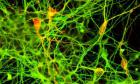
The Nobel Prize-winning discovery of how to reprogram ordinary cells to behave like embryonic stem cells offers a way to skirt around ethical problems with human embryos, but safety concerns make their future use in treating disease uncertain.
While researchers have already applied the scientific breakthroughs of Britain's John Gurdon and Japan's Shinya Yamanaka to study how diseases develop, making such cells into new treatments will involve a lot more checks.
Yogurt may reduce high blood pressure
Source : UPI | 20 Sep 2012
Long-term yogurt-eaters were less likely to develop high blood pressure than those who didn't eat yogurt, U.S. researchers found.
During the 15 year study, the researchers tracked more than 2,000 volunteers who did not have high blood pressure at the beginning of the study.
Yogurt consumption was measured by questionnaires filled out by the volunteers at three intervals over the study period.
Europe to follow Turkish model on medicines
Source : Anadolu Agency | 18 Sep 2012
The Council of Europe will follow the Drug Tracking System (ITS) of Turkey in a European project whereby patients can reach medication safely.
A senior official with the European Directorate for the Quality of Medicines and HealthCare (EDQM), Francois Xavier Lery closely observed the ITS in Turkey and took notes for the council's drug tracking project, eTACT.
Bee study lifts lid on hive habits
By Ian Sample | Guardian | 17 Sep 2012
Experiments on the division of labour in honeybee hives have revealed why some bees do the waggle dance while others nurse their queens.
The roles require drastically different behaviours, with nurses feeding the larvae and performing royal grooming duties, and foragers navigating great distances and performing complex dance routines to point others in the direction of rich sources of nectar.
Smokers may have more sleep problems: study
Source : Agencies | 15 Sep 2012
Smokers may get fewer hours of sleep and have less restful slumber than non-smokers, according to a German study that looked at more than two thousand people.
Researchers whose work appeared in the journal Addiction Biology found that of nearly 1,100 smokers surveyed, 17 percent got fewer than six hours of sleep each night and 28 percent reported "disturbed" sleep quality.
Stressed at work? Look out for your heart
Source | Reuters | 14 Sep 2012
People who have highly demanding jobs and little freedom to make decisions are 23 percent more likely to have a heart attack compared with their less stressed out colleagues, according to research published on Friday.
But lighting up a cigarette or remaining chained to your desk rather than getting out to do some exercise is far more damaging for your heart health, researchers said.
Fish Oil No Lifesaver, Study Finds
By Dr. Heather Hawthorne | ABC News | 12 Sep 2012
Fish Oil May Not Help You Live Longer
Fish oil -- a supplement taken daily by millions of Americans -- may not help you live longer, a new study released today suggests.
The study is the latest piece of research feeding the debate over whether regularly taking omega-3 supplements -- most commonly in the form of fish oil -- helps the heart.
Study sees no nutritional edge in organics
By Elizabeth Weise | USA Today | 05 Sept 2012
Organic products have no significant nutritional advantage over conventional foods, even though consumers can pay more for them, a new study finds.
The findings suggest that a key reason behind why many people buy organic products -- a $28.6 billion market last year -- may not be borne out by the science.
The four-year project began when two doctors wondered what advice they should give their families and patients about whether to buy organic or conventional foods.