





Sufism
Everything is up to a person
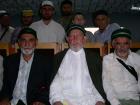
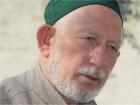
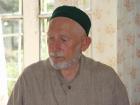
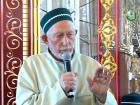
Speech by Shaykh Said Afandi al-Chirkawi on the Ulama Majlis in Chirkey on January, 1, 2005.
Tests and trials from Allah
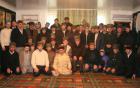
Sermon delivered by Shaykh Said Afandi in Chirkey village mosque after Tarawih prayer on 27 Ramadan 2005.
Importance of following Shaykhs
Mawlid sermon by Shaykh Said Afanfi al-Chirkawi on the night Shaykh Muhammad al-Bukhari was born, in village Chirkey, Dagestan.
‘Nur ul-Islam’ newspaper published a letter by Abdulatip to his father. Abdulatip, Najmuddin Gotsinski’s brother, was a great saint. In his letter he tells his father: “Without going to the Tariqa ustaz, it is difficult to remember Allah often.” I personally saw the proof to this.
No matter what you are told, I bestow on you: never leave the Tariqa. Whoever leaves it, will end up on the wrong track.
Branches of Tariqah
Sermon by Shaykh Said Afandi al-Chirkawi in the village of Lower Kazanische, Dagestan
Some people think we do not recognize Abdurahman Sughuri. But who really wants to know the truth, he knows; and who does not, will never do. How can we reject him? Take for example a tree trunk. The trunk has branches. All branches grow on the same tree, and there is no difference between them. Some people collect the fruit on this branch, and the others collect on the different branch. They keep to their branches and do not swap them.
Shazali Tariqah in Dagestan
Sermon by Shaykh Said Afandi al-Chirkawi | Upper Kazanische | 20 Aug 2005
Dear Jamaat, dear brothers in faith, may Allah accept our present-day Majlis. There is a well-known hadith, which says that in the afterlife we will find those who we loved in this world. There is hardly a person who did not love Sayfulla-Qadi (may Allah bless his soul). InshaAllah-Rahman, we hope that by the grace of Allah we will all get together in Akhirat under Liwaul Hamd, the banner of the Prophet (PBUH) just like here.
Ten principles for those seeking the path of Allah
By : Imam Abu Hamid Al-Ghazali
Source : Suhaib Webb
Principle 1: Have a sincere, unwavering intention. Prophet Muhammad said,"each person will be rewarded for what he intended" (Muslim). This calls for determination in the heart to continuously act or to abstain from something only for God's sake. A sign of having sincere intentions is that one does not change his resolve for fleeting reasons; what is done for God, the Truth, should not be forsaken to please His creation.
Tawassul and istighasa through the Prophet (PBUH)
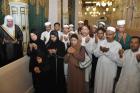
One misconception of Ibn Taymiya has disrupted the Muslim community. He condemned tawassul and istighasa (asking for help) through the Prophet(PBUH). No one of the ulama ever stated a similar opinion.
Actually Ibn Taymiya was wrong affirming that tawassul and istighasa were not permitted. There was no alim thinking this way except for him. Quite the contrary, tawassul through the Prophet(PBUH) is a hasan (a good deed). No matter when is it used - before or after the creation of the Prophet (PBUH), during his life or after his death.
Significance of Sufism

Ahmad Zaruk said: “Sufism has more than 2000 definitions, but all of them have the same key point that is a selfless, sincere appealing to and serving Allah”. The pillar of Sufism is heart cleansing of worldly passions and its backbone is person’s relations with the God Almighty. A Sufi is someone whose heart is open to Allah and whose deeds are for the Almighty’s sake.
Origin of the word Sufism
Sufi History in Daghestan
Sufism has an age-long history which has yet only recently become the subject of study. However the last few years have seen a certain amount of work done, for example, the publication of important articles on the history and practice of Sufism in Daghestan, especially in the 18th-20th centuries, Sufi treatises by Dagestani authors. The research sources pool has grown. The Eastern Literature publishing house in Moscow has released an important monograph by a Dagestani author Alikber Alikberov on the early history of Sufism in Daghestan.
Levels of Murids
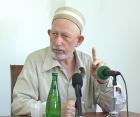
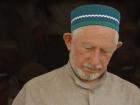
Speech by Honorable Shaykh Said Afandi in Chirkey village mosque, April 2007.
Dear brothers in faith,
the people, who spoke before me, said all, nothing was missed out. May Allah be pleased with them, and also with those, who didn’t speak.